
Stories & Features

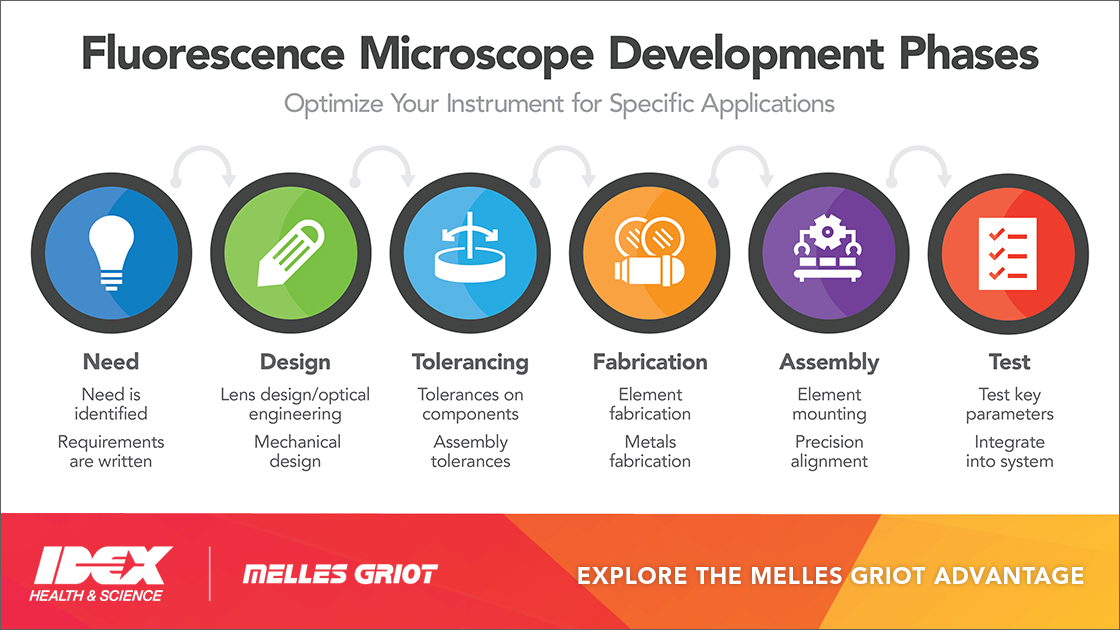
There is a common misconception in instrument development: that custom always means expensive. For many engineers, this leads to sticker shock when they see a custom quote, causing them to default to off-the-shelf (OTS) components.
However, the cost delta between custom and off-the-shelf is often a myth when you look at the efficiencies gained across the entire Development Pathway from IDEX Health & Science.
When you build hundreds of instruments a year, the financial landscape changes dramatically. Custom optics don't just solve price problems; they eliminate hidden costs at every stage of development:
As David Steinchen, Director of Systems Imaging RD&E, emphasizes: “Don't let the custom label scare you.” If you are building 20 units, stick with OTS. But if you are building a product for volume, the Development Pathway isn't an added expense—it's a cost-saving tool. The real ROI of collaboration is found in a system designed for your exact requirements, delivering better performance and a more viable business case.
The cost of an optical system isn't just the price of the parts—it’s the cost of alignment, the cost of wasted sensor space, and the cost of engineering workarounds. When you partner with us for a custom solution, you are investing in a streamlined path to market.
Our Melles Griot Optical System Capabilities allow us to leverage high-volume manufacturing efficiencies that most boutique design firms can’t match. By managing final system integration under one roof, we eliminate the "margin-on-margin" costs associated with juggling multiple vendors.
Don't let the fear of custom limit your instrument's potential. Whether you are optimizing for footprint, throughput, or long-term unit cost, our team is ready to show you how an integrated optical system provides the ultimate return on investment.
Get practical insights on optical system design, cost optimization, and performance tradeoffs—delivered to your inbox.
Part 1: How to Design a Fluorescence Microscope System
Explore how a custom optical system can improve performance and reduce total cost over time.